Uphold vs Coinbase: Fees, Custody and Moving Coins Between Them
Uphold publishes its spreads, while Coinbase shows its spread and fee on the order preview. Here is how the two compare on cost, New York access, custody terms and XRP transfers.
Reviews and comparisons of cryptocurrency exchanges.
Reviews and comparisons of cryptocurrency exchanges.
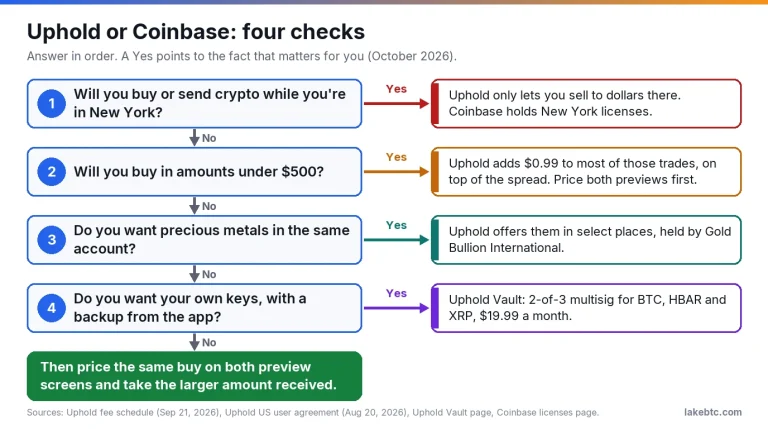
Uphold publishes its spreads, while Coinbase shows its spread and fee on the order preview. Here is how the two compare on cost, New York access, custody terms and XRP transfers.
Bybit’s Service Agreement designates the United States an Excluded Jurisdiction under Section 11.3.

Robinhood Crypto layers digital-asset trading onto a Nasdaq-listed brokerage app, charging up to 1.75% on instant transfers.

Gemini operates as a state-chartered trust company rather than a standard exchange, which shapes its regulatory obligations and security approach.
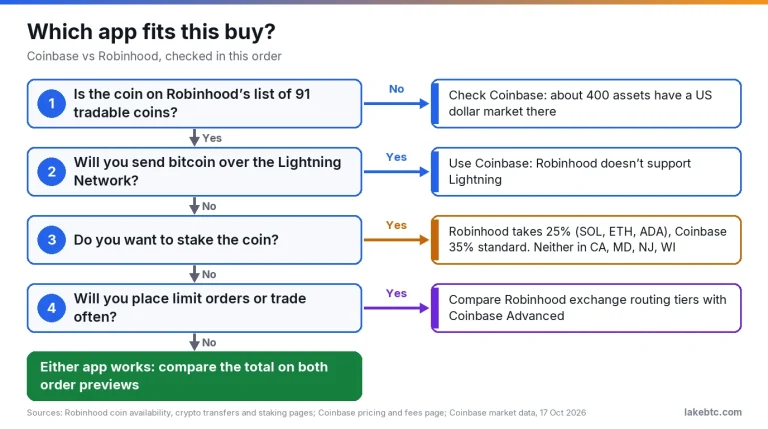
What Coinbase and Robinhood charge on a crypto buy, which coins and states each covers, and what changes when you move coins, stake them or file taxes.

Coinbase carries a $320 million commercial crime insurance policy on hot, warm, and cold storage assets. This review examines its fees, safety record, and best-fit users.

uphold review explained: fees, security, and what to know before you start.

bitget review explained: fees, security, and what to know before you start.
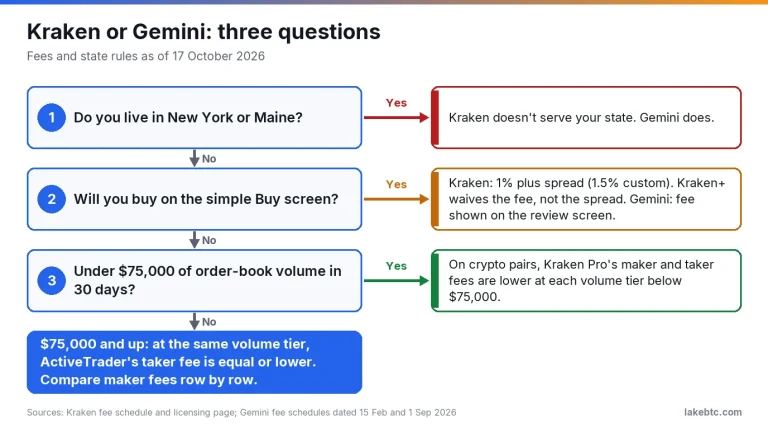
On crypto pairs, Kraken Pro costs less than Gemini ActiveTrader below $75,000 of 30-day volume, Gemini serves New York and Maine, and the two handle deposit holds and withdrawals differently.
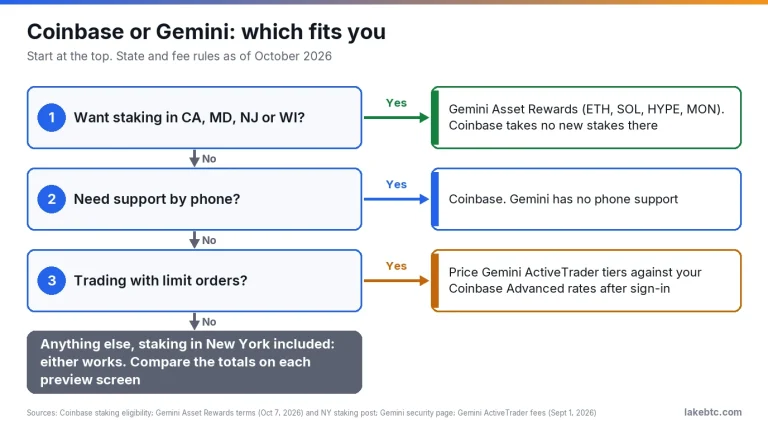
Coinbase and Gemini compared on what each screen charges, which company holds your account, staking rules by state, transfers between them and the tax forms you get.