
How to Buy Solana (SOL) in the US
How to Buy Solana (SOL): A Step-by-Step Guide
Solana (SOL) is the native token of the Solana blockchain, a high-throughput proof-of-stake network designed for fast, low-cost transactions. US residents can purchase SOL on several major centralized exchanges (CEXs), including Coinbase, Kraken, and Gemini, as well as through peer-to-peer platforms and certain brokerage apps. The process generally takes less than 30 minutes from account creation to completed purchase, provided identity verification documents are on hand.
What Is Solana (SOL)?
Solana is a layer-1 blockchain that uses a hybrid consensus mechanism combining Proof of Stake (PoS) with a time-ordering system known as Proof of History (PoH). According to the official Solana documentation, the network is designed to support high transaction throughput while maintaining relatively low on-chain fees. SOL serves as the network’s gas token, used to pay for transactions and interact with smart contracts, and may also be staked to help validate the network.
Before purchasing SOL, it is important to understand that all cryptocurrency investments carry significant risk, including the potential loss of principal. This guide covers the mechanics of buying SOL, not the investment merits of the asset.
Where to Buy Solana in the United States
Most US residents buy SOL through a regulated centralized exchange. These platforms handle custody, provide fiat on-ramps (bank transfer, debit card, wire), and are registered with FinCEN as Money Services Businesses. Some are also licensed under state-level virtual currency regulations (e.g., New York’s BitLicense).
For a broader comparison of platforms, see our guide to the best crypto exchanges currently available to US users.
Centralized Exchange Options
| Exchange | SOL Available? | Payment Methods | Typical Maker/Taker Fee | Regulatory Notes |
|---|---|---|---|---|
| Coinbase | Yes | Bank ACH, Debit card, Wire | 0.40% / 0.60% (Advanced Trade entry tier; spread-based on Simple) | Publicly traded (NASDAQ: COIN); registered MSB |
| Kraken | Yes | Bank ACH, Wire, debit card (via Kraken Pro) | 0.25% / 0.40% (starter tier) | Registered MSB; state-licensed in multiple states |
| Gemini | Yes | Bank ACH, Wire, Debit card | 0.20% / 0.40% (ActiveTrader; convenience fee on basic) | NYDFS-licensed; SOC 2 Type 2 certified |
| Crypto.com | Yes | Credit/Debit card, Bank transfer | 0.25% / 0.50% (standard; lower with CRO staking) | Registered MSB; holds multiple state licenses |
Fee structures are subject to change. Always verify current rates on each exchange’s official fee schedule before trading. See our dedicated crypto exchange fees comparison for a deeper breakdown.
Decentralized Exchange (DEX) Options
Users who already hold another cryptocurrency (such as USDC on the Solana network) may swap to SOL using Solana-native DEXs such as Jupiter Aggregator or Raydium. DEX swaps typically incur the underlying network fee (historically very small on Solana) plus a protocol fee or spread. However, DEXs do not provide a fiat on-ramp, so US users generally need a CEX account first to convert dollars into crypto before moving to a DEX.
Step-by-Step: How to Buy SOL on a Centralized Exchange
The steps below reflect the general process across major US-facing CEXs. Specific UI layouts vary by platform.
- Create and verify an account. Navigate to the exchange’s registration page. Provide your full legal name, date of birth, residential address, email, and phone number. Most US exchanges require identity verification (KYC) under FinCEN guidelines: typically a government-issued ID (driver’s license or passport) and, in some cases, a selfie or liveness check. Verification can take minutes to a few business days depending on volume.
- Enable two-factor authentication (2FA). Before funding your account, activate 2FA, preferably using an authenticator app (e.g., Google Authenticator or Authy) rather than SMS, which may be vulnerable to SIM-swap attacks according to CISA guidance.
- Deposit funds. Link a US bank account via ACH for lowest fees, or use a debit card for faster settlement. ACH transfers may take 1–5 business days to fully settle, though many exchanges allow trading against a pending ACH balance up to certain limits. Wire transfers typically settle same or next business day.
- Locate the SOL trading pair. Search for “SOL” or “Solana” in the exchange’s asset search. Common pairs include SOL/USD and SOL/USDC. If using a pro/advanced interface, select the order type (market, limit, or stop-limit).
- Place your order. Enter the dollar amount or SOL quantity you wish to purchase. Review the total cost including all fees before confirming. A market order executes immediately at the current market price; a limit order executes only if the price reaches your specified level.
- Review and confirm. Double-check the fee breakdown displayed at the order confirmation screen. Submit the order.
- Withdraw to a self-custody wallet (optional but recommended for larger holdings). Once purchased, you may leave SOL on the exchange (exchange custody) or withdraw to a personal wallet. See the wallet section below for details.
For a more general walkthrough applicable to multiple assets, our how to buy crypto guide covers the full process in detail.
Choosing a Solana Wallet
If you intend to hold SOL outside an exchange, for example, to interact with Solana-based decentralized applications (dApps) or to maintain self-custody, a dedicated Solana wallet is necessary.
Software (Hot) Wallets
- Phantom: One of the most widely used browser-extension and mobile wallets for Solana. Open-source audits have been conducted on portions of its codebase. Supports NFTs and dApp connections.
- Solflare: A Solana-native wallet supporting staking directly within the interface. Available as a browser extension and mobile app.
- Backpack: A newer entrant with xNFT (executable NFT) support, aimed at power users of the Solana ecosystem.
Hardware (Cold) Wallets
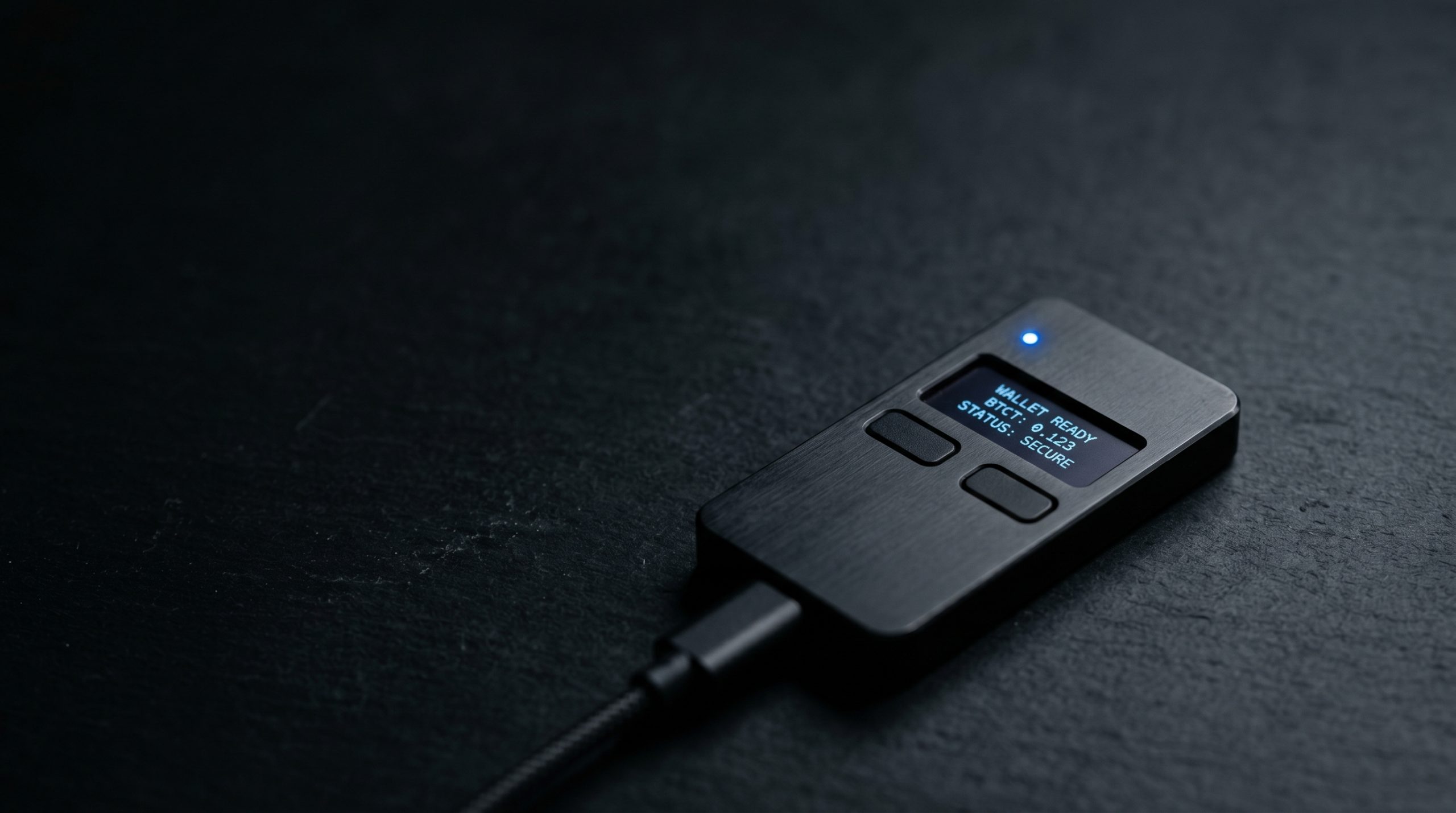
- Ledger (Nano X / Nano S Plus): Supports SOL via the Ledger Live app or when connected to Phantom or Solflare. Keeps private keys offline, significantly reducing remote attack surface.
- Trezor (Model T / Safe 3): SOL support is available through third-party integrations; check Trezor’s official compatibility documentation for the latest status, as support has evolved over time.
Important: When setting up any self-custody wallet, the seed phrase (12 or 24 words) must be written down and stored securely offline. Loss of the seed phrase means permanent loss of access to funds. No exchange or wallet provider can recover it.
Fee Considerations When Buying SOL
The total cost of purchasing SOL comprises several potential fee layers:
- Trading/transaction fee: The exchange’s maker/taker or flat-rate fee applied to the purchase order.
- Spread: On simple/basic interfaces, exchanges often widen the buy/sell spread rather than charging an explicit fee. Spreads can range from under 1% to over 2% depending on the platform and market conditions.
- Deposit fee: ACH deposits are generally free; debit card deposits often carry a fee of approximately 1.5%–3.99% depending on the exchange.
- Withdrawal fee: Sending SOL from an exchange to a personal wallet typically incurs a small network fee, which the exchange may pass on at cost or add a margin to.
Using a pro/advanced trading interface (e.g., Coinbase Advanced Trade, Kraken Pro) typically yields meaningfully lower fees than using a simplified consumer interface, as the latter generally bakes a larger spread into the quoted price.
How Much SOL Can You Buy With $100?
The quantity of SOL purchasable with any fixed dollar amount depends entirely on the prevailing market price at the time of purchase, which fluctuates continuously. At any given moment, dividing $100 by the current SOL/USD market price, minus applicable fees, gives the approximate quantity received. For example, if SOL is trading at $50, $100 (before fees) would purchase approximately 2 SOL; if trading at $200, the same $100 would yield approximately 0.5 SOL. Most exchanges support fractional purchases, meaning there is no minimum requiring a full token.
Checking real-time pricing on an exchange’s order book or on aggregators such as CoinGecko or CoinMarketCap before placing an order gives the most accurate expectation of quantity received.
Key Risks to Understand Before Buying
- Price volatility: Cryptocurrency markets, including SOL, have historically exhibited high volatility. Past performance does not indicate future results.
- Network risk: The Solana network has experienced multiple notable outages since its mainnet launch in 2020, as documented in various Solana status reports. Ongoing network improvements aim to address stability concerns, though no network can guarantee uptime.
- Regulatory risk: The regulatory classification of SOL and other cryptocurrencies in the US remains evolving. The SEC and CFTC have both asserted jurisdiction over various aspects of the crypto market. Changes in regulation may affect exchange listings or trading availability.
- Custody risk: Funds held on an exchange are subject to counterparty risk (exchange insolvency, hacks). Self-custody eliminates exchange counterparty risk but introduces personal security responsibility.
- Smart contract risk: Interacting with Solana dApps introduces additional smart contract and protocol risk beyond simple asset holding.
Frequently Asked Questions
How much Solana can I buy with $100?
The exact amount depends on SOL’s current market price at the time of your purchase, minus applicable exchange fees. Since SOL is divisible, you will receive a fractional amount if the price per token exceeds $100. Check the live SOL/USD price on your chosen exchange’s trading interface immediately before placing an order for the most accurate estimate.
Do I need to buy a whole SOL token?
No. Most exchanges allow fractional purchases of SOL down to very small decimal amounts, meaning you can invest any dollar amount above the platform’s minimum order size (which is generally a few dollars on major exchanges).
Is it safe to leave SOL on an exchange?
Leaving assets on an exchange introduces counterparty risk, if the exchange is hacked, becomes insolvent, or halts withdrawals, access to funds may be impaired. For amounts you consider significant, many security-focused practitioners recommend withdrawing to a self-custody wallet. For frequent trading or small amounts, the convenience of exchange custody may outweigh the additional steps of self-custody.
Can I stake SOL after buying it?
Yes. SOL may be staked natively on the Solana network to earn staking rewards by delegating to a validator. Some exchanges offer custodial staking programs. Self-custody wallets such as Solflare also support native staking directly within the interface. Staking rewards rates are variable and depend on network conditions; they are not guaranteed. Review the Solana Foundation’s staking documentation for current network parameters.
Are there any US states where purchasing SOL is restricted?
Availability varies by exchange and state. Some exchanges do not operate in New York without a BitLicense, or may restrict certain assets in specific jurisdictions. Check each exchange’s supported states page, typically found in their legal or terms of service documentation, before creating an account.
What is the minimum amount of SOL I can buy?
Minimum purchase amounts vary by platform and payment method. On most major CEXs, the minimum is typically a small dollar equivalent (often $1–$10). Refer to the specific exchange’s fee and limits page for current minimums, as these are subject to change.


