OKX Review: Fees, Features, and Is It Safe?

OKX is one of the largest centralized cryptocurrency exchanges by reported trading volume, operating across dozens of markets worldwide and offering spot trading, derivatives, a non-custodial wallet, and a broad suite of Web3 tools. Whether OKX is “trusted” depends on the dimension being evaluated: regulatory standing, security track record, fee transparency, and user-reported experience can each tell a different story. This guide examines the available evidence across all four dimensions so readers can form an informed view.
In this article
OKX at a Glance
| Attribute | Detail |
|---|---|
| Founded | 2017 (as OKEx; rebranded to OKX in 2022) |
| Headquarters | Seychelles (international entity); San Jose, California (US regional HQ as of April 2025) |
| Supported spot pairs | Hundreds of pairs across major and emerging assets (see OKX Markets for the live list) |
| Derivatives offered | Perpetual swaps, futures, options |
| Native token | OKB |
| Proof of Reserves | Published monthly; third-party attestations available |
| US availability | Available — OKX launched a regulated US exchange in April 2025 (initially in 46 states and Washington, D.C.; coverage has expanded since — verify the current state list on OKX’s US platform) |
| Trustpilot rating | Roughly 3 out of 5 across approximately 1,700 reviews as of mid-2026 (Trustpilot; ratings shift over time) |
Note: Figures above are drawn from publicly available sources and may change. Always verify directly with OKX or a third-party aggregator before making decisions.
What Is OKX?
OKX traces its origins to OKCoin, a China-based exchange launched in 2013. A separate entity, OKEx, was spun off in 2017 to serve international markets and was subsequently rebranded as OKX in 2022 to signal a strategic shift toward Web3 and non-custodial products. According to data aggregated by CoinMarketCap, OKX consistently ranks among the top tier of global exchanges by reported 24-hour spot and derivatives volume, though self-reported volume figures across the industry carry well-documented reliability caveats.
The platform operates a centralized exchange (CEX) for spot and derivative trading alongside a self-custodial wallet application, marketed as the “OKX Wallet”, that allows users to interact with decentralized protocols without routing assets through OKX’s custodial infrastructure. For traders comparing platforms, our best crypto exchanges guide covers how OKX benchmarks against key competitors on liquidity, fees, and regulatory posture.
Is OKX Regulated?
Regulatory standing is one of the most consequential trust signals for any centralized exchange. OKX’s licensing footprint has expanded in recent years, though coverage remains uneven by jurisdiction.
Key Regulatory Licenses (as of publication date)
- Dubai (VARA): OKX holds a virtual asset service provider (VASP) license from the Dubai Virtual Assets Regulatory Authority, making it one of the earlier major exchanges to obtain formal authorization in the UAE market.
- European Union (MiCA): OKX Europe Limited holds a MiCA CASP licence from the Malta Financial Services Authority (issued January 2025), allowing it to operate across all 30 EEA member states. From 1 July 2026, exchanges without a MiCA licence must stop serving EU users.
- Australia (AUSTRAC): OKX Australia Pty Ltd is registered as a digital currency exchange provider with the Australian Transaction Reports and Analysis Centre (AUSTRAC).
- United States: OKX launched a regulated US exchange in April 2025, initially accessible in 46 states and Washington, D.C., with coverage expanding since. The launch followed OKX’s February 2025 guilty plea to violating U.S. anti-money laundering laws, with OKX agreeing to pay more than $504 million in penalties ($420.3 million forfeiture plus $84.4 million criminal fine) and to retain an external compliance consultant through February 2027. OKX has stated that no government-appointed monitor was part of the settlement. Details are available in the DOJ’s press release.
Registration and licensing do not guarantee solvency or the absence of operational risk. They indicate that an exchange has met a defined compliance threshold in a given jurisdiction at a particular point in time.
OKX Security Architecture
OKX publishes a security overview on its official documentation portal. Key features described there include:
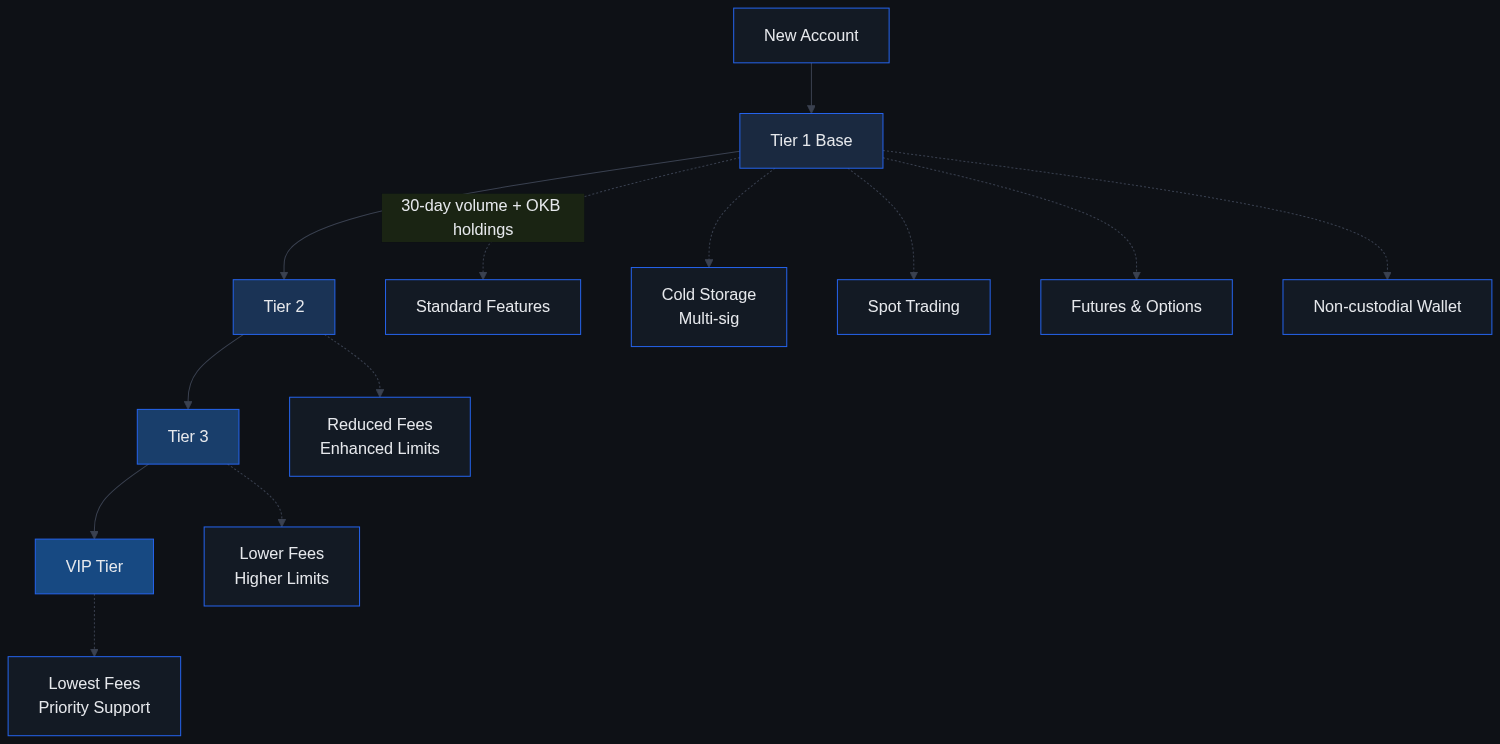
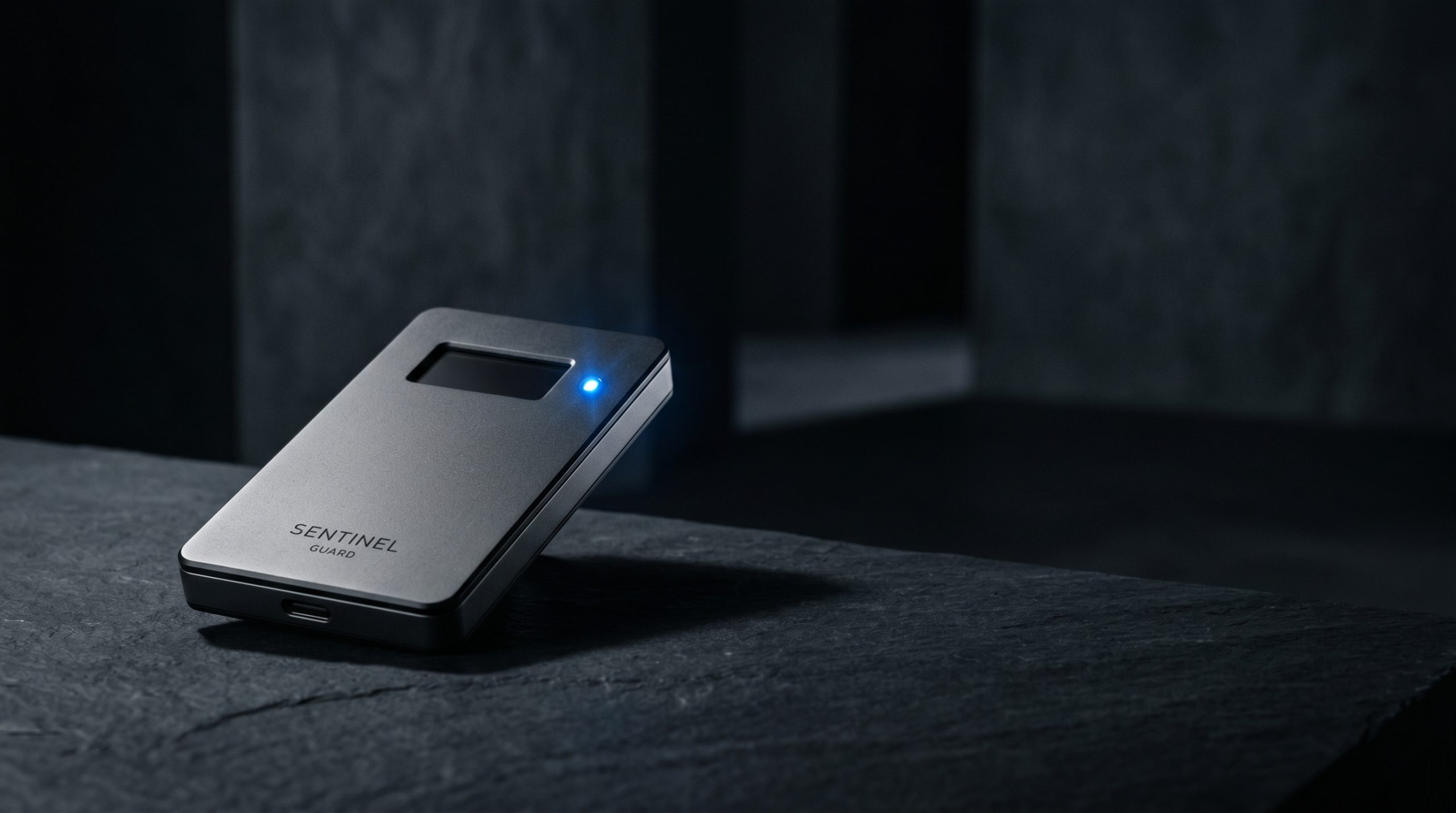
- Cold storage: OKX states that a substantial majority of user funds are held in air-gapped cold wallets, though the precise percentage may vary and is not independently audited in real time.
- Multi-signature (multi-sig) controls: Withdrawal transactions from cold storage reportedly require multiple key holders to authorize, reducing single-point-of-failure risk.
- Two-factor authentication (2FA): The platform supports authenticator-app-based 2FA and hardware security key (FIDO2/WebAuthn) enrollment in addition to SMS-based verification. Security researchers generally recommend against relying solely on SMS-based 2FA due to SIM-swap risks.
- Anti-phishing code: Users can configure a personalized anti-phishing string that appears in all legitimate OKX emails, a low-cost but effective control against spoofed communications.
- Bug bounty program: OKX operates a vulnerability disclosure and bounty program. Details and scope are available via the platform’s security page.
OKX has not disclosed a major exchange-level hack involving user fund losses comparable to high-profile industry incidents. However, individual accounts are occasionally compromised via phishing, SIM-swap, or credential stuffing, risks that exist across all custodial platforms and are not unique to OKX.
Proof of Reserves: What OKX Publishes
Following the collapse of FTX in late 2022, proof-of-reserves (PoR) publication became an industry expectation. OKX publishes monthly PoR reports and makes Merkle-tree verification tooling available so users can confirm their own balances are included in reserve snapshots. The attestations are conducted by third-party accounting firms, though it is important to note that a PoR attestation is not equivalent to a full financial audit and does not capture liabilities comprehensively. The OKX Proof of Reserves page provides the current reports and historical data.
OKX Fee Structure
OKX uses a tiered maker-taker fee model. Fees decline as 30-day trading volume and OKB holdings increase. The figures below reflect publicly documented standard (Tier 1) rates for spot and futures; options use a separate tier-based schedule published on the same page. Users should confirm current rates at OKX’s official fee schedule before trading, as these may be updated without notice.
| Market Type | Maker Fee (Tier 1) | Taker Fee (Tier 1) |
|---|---|---|
| Spot trading | ~0.08% | ~0.10% |
| Futures / Perpetual swaps | ~0.02% | ~0.05% |
US readers: the rates in this table are the global OKX schedule. OKX US runs its own, higher fee schedule and is spot-only, with no perpetuals, futures or options. Third-party trackers reviewed in September 2026 put the OKX US entry tier between roughly 0.14% maker / 0.23% taker and 0.20% / 0.35%, so check the rate shown in your own account before trading.
Approximate rates based on OKX’s published global schedule, reviewed September 21, 2026. Holding OKB tokens and reaching higher volume tiers may reduce fees further. Withdrawal fees vary by asset and network congestion.
For context on where these rates sit relative to the broader market, see our crypto exchange fees comparison, which benchmarks major platforms side by side.
OKX User Reviews and Reputation
Third-party user review platforms surface a noticeably mixed picture of OKX’s customer-facing quality.
- Trustpilot: As of mid-2026, OKX holds an average rating of roughly 3 out of 5 across approximately 1,700 reviews (Trustpilot; the exact figure shifts as new reviews arrive). Negative reviews cluster around customer support response times, account verification delays, and, in at least one publicized case on Reddit, disputes over asset handling during certain token migration events. Positive reviews tend to highlight platform depth, fee competitiveness, and product breadth.
- Reddit communities: Discussion in publicly indexed threads generally characterizes OKX as a legitimate, large-scale exchange while noting that it may not be the preferred choice for users who prioritize simplified interfaces or local-currency fiat rails.
- Industry recognition: OKX has been a sponsor of major sports and esports properties, which speaks to brand-building investment but does not itself confer trustworthiness from a financial-infrastructure standpoint.
A low Trustpilot score does not necessarily indicate systemic fraud or insolvency risk; review platforms tend to over-represent users who encountered friction. However, patterns of complaints, particularly around fund access and support responsiveness, are worth factoring into a due-diligence process.
OKX Pros and Cons
Pros
- Deep liquidity on major spot and derivatives pairs, which may support tighter spreads for active traders
- Competitive maker-taker fee tiers, particularly for high-volume participants
- Published monthly proof-of-reserves with Merkle-tree user verification
- Established regulatory licensing footprint (Dubai VARA, Australian AUSTRAC registration, and EU MiCA CASP licence from Malta FSA issued January 2025)
- Integrated non-custodial wallet for DeFi and multi-chain access without moving funds onto OKX’s balance sheet
- Broad asset selection across spot, perpetuals, futures, and options markets
Cons
- February 2025 criminal guilty plea and $504 million+ penalty for AML violations is a material compliance red flag; an external compliance consultant remains engaged through February 2027 under the plea agreement
- Middling Trustpilot rating driven in part by customer support and account-access complaints
- International exchange entity incorporated in Seychelles, with limited investor-protection frameworks compared to US or EU-regulated alternatives
- PoR attestations do not replace complete third-party audits of assets and liabilities
- Historical association with an incident in 2020 where OKEx temporarily suspended withdrawals for approximately six weeks (from mid-October to late November 2020)
Who Should Consider OKX?
Based on publicly available product documentation and market positioning, OKX may appeal to:
- Traders seeking access to derivatives markets (perpetual swaps, options) with competitive fee tiers
- Web3 users who want a single interface spanning a CEX and a self-custodial multi-chain wallet
- Institutional or high-frequency participants who can access lower fee tiers through volume thresholds
US-based traders can now access OKX through its regulated US exchange, launched in April 2025 in 46 states and Washington, D.C., with coverage expanding since. The US product is spot-only and differs from the international exchange, and third-party reviews in 2026 still list New York and Texas among the states OKX US does not serve; verify current availability at OKX’s US platform. For a broader comparison, our how to buy crypto guide covers exchanges with full US regulatory authorization.
Frequently Asked Questions
Is OKX a trusted company?
OKX is one of the world’s largest centralized exchanges by reported trading volume and holds regulatory authorizations in several jurisdictions, including a Dubai VARA license, Australian AUSTRAC registration, and a MiCA CASP licence from the Malta Financial Services Authority (January 2025). However, OKX’s February 2025 criminal guilty plea for U.S. anti-money laundering violations — resulting in a $504 million+ penalty and an external compliance consultant engaged through February 2027 — its middling Trustpilot rating driven by customer-service complaints, and the inherent custodial risks of any centralized exchange mean “trust” should be evaluated per-dimension and per-use-case rather than as a binary determination. Independently verifying your balance through OKX’s Merkle-tree PoR tool and enabling strong account security controls are advisable regardless of overall platform reputation.
Is OKX available in the United States?
Yes. OKX launched a regulated US exchange in April 2025, initially accessible in 46 states and Washington, D.C., and coverage has expanded since. The launch followed OKX’s February 2025 guilty plea to U.S. anti-money laundering violations and payment of more than $504 million in penalties. US users should verify current product and state availability at OKX’s US platform, as the US offering may differ from the international exchange.
How does OKX’s proof of reserves work?
OKX publishes monthly snapshots of on-chain reserve holdings and makes Merkle-tree verification available so individual users can confirm their account balance is included in the reserve dataset. The process allows partial verification of asset backing without providing a complete picture of liabilities, which a full audit would capture. Details are published at OKX’s official Proof of Reserves page.
What are OKX’s spot trading fees?
On the global exchange, standard (Tier 1) spot fees are approximately 0.08% maker and 0.10% taker. OKX US uses a separate, higher schedule. Global fees decline with higher 30-day volume and OKB token holdings. Current rates should always be confirmed directly at OKX’s fee schedule page, as rates are subject to change.
Has OKX ever been hacked?
OKX has not disclosed a major platform-level security breach resulting in significant user fund losses as of the publication date of this article. The exchange experienced a withdrawal suspension in 2020 for approximately six weeks (from mid-October to late November 2020) related to a regulatory matter involving a key holder; this was not a hack but caused market concern at the time. Individual account compromises via phishing or credential attacks are reported across all major exchanges and are not unique to OKX.
What is OKB?
OKB is OKX’s native exchange token. Holding OKB may reduce trading fees and unlock platform features. Like all exchange tokens, OKB carries speculative risk and its value is correlated with platform-level sentiment and broader market conditions. This article does not constitute investment advice regarding OKB or any other asset.