Is Sui (SUI) a Good Investment?
Sui pairs a parallel-execution architecture with a young track record and a heavy token unlock schedule. This analysis breaks down the risks and use cases before deciding whether to buy.
LakeBTC guides are drafted with AI research assistance and are fact-checked, edited, and approved by a human editor before publication.
Sui pairs a parallel-execution architecture with a young track record and a heavy token unlock schedule. This analysis breaks down the risks and use cases before deciding whether to buy.
Ethereum’s market cap of $217.6B dwarfs Cardano’s $6.3B, but size alone doesn’t settle which network fits a given strategy.
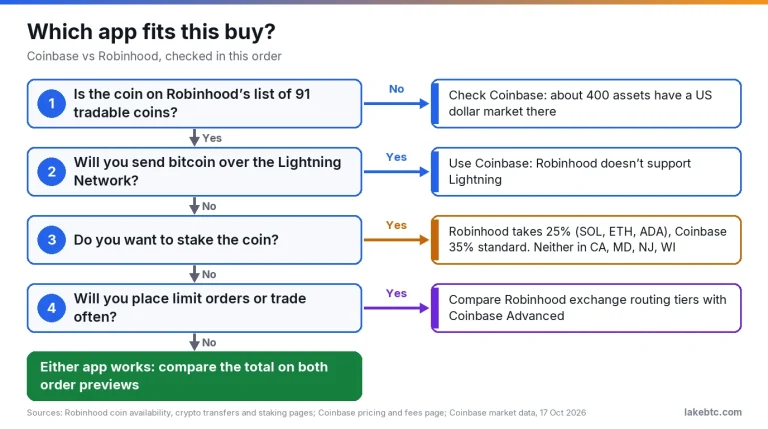
What Coinbase and Robinhood charge on a crypto buy, which coins and states each covers, and what changes when you move coins, stake them or file taxes.

Coinbase carries a $320 million commercial crime insurance policy on hot, warm, and cold storage assets. This review examines its fees, safety record, and best-fit users.

Stellar has built payment infrastructure for over a decade, focusing on low-cost cross-border transfers rather than speculative hype.

Bitcoin and XRP diverge sharply in design, use case, and regulatory history, most notably the $125 million SEC penalty tied to Ripple’s institutional sales.

BNB’s value ties directly to Binance and BNB Chain activity, unlike a store-of-value asset such as Bitcoin.

uphold review explained: fees, security, and what to know before you start.

Dogecoin runs its own Layer-1 chain built for payments, while Shiba Inu operates as an Ethereum-based token with DeFi ambitions.

Solana’s technical fundamentals and volatility make it a complex investment case, not a simple yes-or-no answer.