Bitget Review: Fees, Safety, and Features

Bitget is a large offshore cryptocurrency exchange known for derivatives trading, copy trading, and a broad spot-market listing, but it does not offer regulated services to US retail customers in the way domestic platforms like Coinbase or Kraken do. This review examines Bitget’s fee structure, security practices, product lineup, and the practical realities of US access based on publicly available information as of this writing.
In this article
- At a Glance: Bitget Snapshot
- Bitget Review Verdict: Is It Worth Using in 2026?
- What Is Bitget? Company Background and Corporate Structure
- Is Bitget Safe? Security, Regulation & Risk Review
- Bitget Fees Explained: Spot, Futures, and Withdrawal Costs
- Bitget US Availability: Can Americans Legally Use Bitget?
- Key Features and Trading Instruments
- Trading Platforms and User Experience
- Account Opening, KYC, and Verification
- Deposits and Withdrawals: Can You Withdraw Money from Bitget?
- Customer Support and Education Resources
- Bitget Pros and Cons
- Bitget vs Competitors: How It Stacks Up
- Real User Sentiment: Trustpilot, Reddit, and Capterra Findings
- Risks of Using Bitget: What to Know Before You Sign Up
- FAQ
At a Glance: Bitget Snapshot
Bitget describes itself on its own site as a global cryptocurrency exchange and Web3 company that has operated since 2018, with a large international user base and coverage across a wide range of countries. Corporate registration details, exact user counts, and reserve figures are the kind of data that changes frequently, so treat the figures below as company-reported and confirm anything material directly on Bitget’s official site before relying on them.
| Category | Detail |
|---|---|
| Founded | 2018, per Bitget’s own company materials |
| Headquarters / registration | Offshore-registered; Bitget holds no US retail licenses |
| Supported assets | Several hundred spot markets advertised; exact count changes as listings are added or removed |
| Derivatives leverage | High leverage advertised on select futures pairs; maximums vary by pair and eligibility |
| Fee tiers | Tiered maker/taker structure with a native token (BGB) discount program |
| Security highlights | Proof-of-reserves page, stated protection fund, bug bounty program |
Bitget Review Verdict: Is It Worth Using in 2026?
Bitget’s product set is built around active trading rather than long-term, buy-and-hold simplicity. That shapes who is likely to get value from the platform and who is better served elsewhere.
Who Bitget Is Best For
- Traders outside the United States who want access to a wide range of altcoin spot markets
- Derivatives traders interested in futures, margin, and funding-rate strategies
- Users who want to follow or become copy-trading “elite traders” on a dedicated social-trading platform
- Holders of the BGB token seeking fee-discount tiers
Who Should Avoid Bitget
- US residents: Bitget does not serve them. The United States, including its territories, is on the restricted-jurisdictions list in Bitget’s Terms of Use, and Bitget has no US-licensed entity
- Beginners who want a simple, single-purpose spot exchange without derivatives, leverage, or a large altcoin catalog
- Institutions or regulation-sensitive users who require an exchange operating under a specific national license they can independently confirm
What Is Bitget? Company Background and Corporate Structure
Bitget positions itself as a combined centralized exchange and Web3 company offering spot, derivatives, copy trading, and a self-custody wallet product. Unlike publicly listed exchanges, Bitget does not file audited corporate disclosures, so authoritative details about ownership structure, registration jurisdiction, and corporate status are best taken from Bitget’s own investor or legal disclosures rather than secondary summaries, since this type of detail changes over time.
Licenses and Regulatory Registrations
Bitget has at various points referenced registrations or authorizations in specific European markets. Because licensing status is exactly the kind of fact that can change or lapse, this article does not assert a current list of jurisdictions where Bitget holds active registration. Confirm any specific licensing claim against the relevant national regulator’s public register before treating it as current.
Trading Volume and Market Ranking
Bitget is regularly listed among the higher-volume centralized exchanges on aggregator sites such as CoinGecko’s exchange rankings. Rankings by reported volume fluctuate daily and can be influenced by wash-trading concerns that affect the sector broadly, so treat any specific rank as a snapshot rather than a fixed fact.
Is Bitget Safe? Security, Regulation & Risk Review
“Is Bitget safe” doesn’t have a single yes-or-no answer. Safety on a centralized exchange is a function of custody practices, proof-of-reserves transparency, regulatory oversight, and the platform’s incident history, and each of those points has different levels of verifiability for Bitget.
Proof-of-Reserves and Protection Fund Claims
Bitget publishes a proof-of-reserves page describing a Merkle-tree verification method and references a protection or insurance fund intended to backstop user losses in specific scenarios. The dollar figures attached to that fund, and the current reserve ratio, change over time, so this review does not restate them as fixed numbers. Check Bitget’s proof-of-reserves page directly for the current figures and audit cadence before relying on any specific percentage or dollar amount.
Regulatory Status by Jurisdiction
Some regulators, including bodies in the UK, maintain public lists of firms operating without local registration or authorization. Whether Bitget currently appears on any such list is a legal-status question that changes over time. Readers concerned about regulatory standing in their jurisdiction should check the relevant regulator’s register directly, such as the UK Financial Conduct Authority’s unauthorised firms list, rather than relying on third-party summaries.
Security Incident History, Bug Bounty, and Cold Storage
Bitget states it maintains a bug bounty program and cold-storage practices for a majority of user funds, consistent with common industry practice. Both claims are company-reported and change over time, so this review does not assign fixed figures to either one.
Insurance Fund Comparison
Several large derivatives exchanges, including Binance (through its SAFU fund) and Bybit, publicly reference insurance or protection funds of their own. Exact balances for any of these funds change over time and are best checked on each exchange’s own transparency page rather than cited from memory.
| Exchange | Stated protective mechanism | Official disclosure page |
|---|---|---|
| Bitget | Proof-of-reserves page, stated protection fund | Bitget’s official transparency page |
| Binance | SAFU fund | Binance’s official SAFU disclosure page |
| Bybit | Insurance fund | Bybit’s official insurance fund page |
Fees and availability reviewed September 21, 2026.
Bitget Fees Explained: Spot, Futures, and Withdrawal Costs
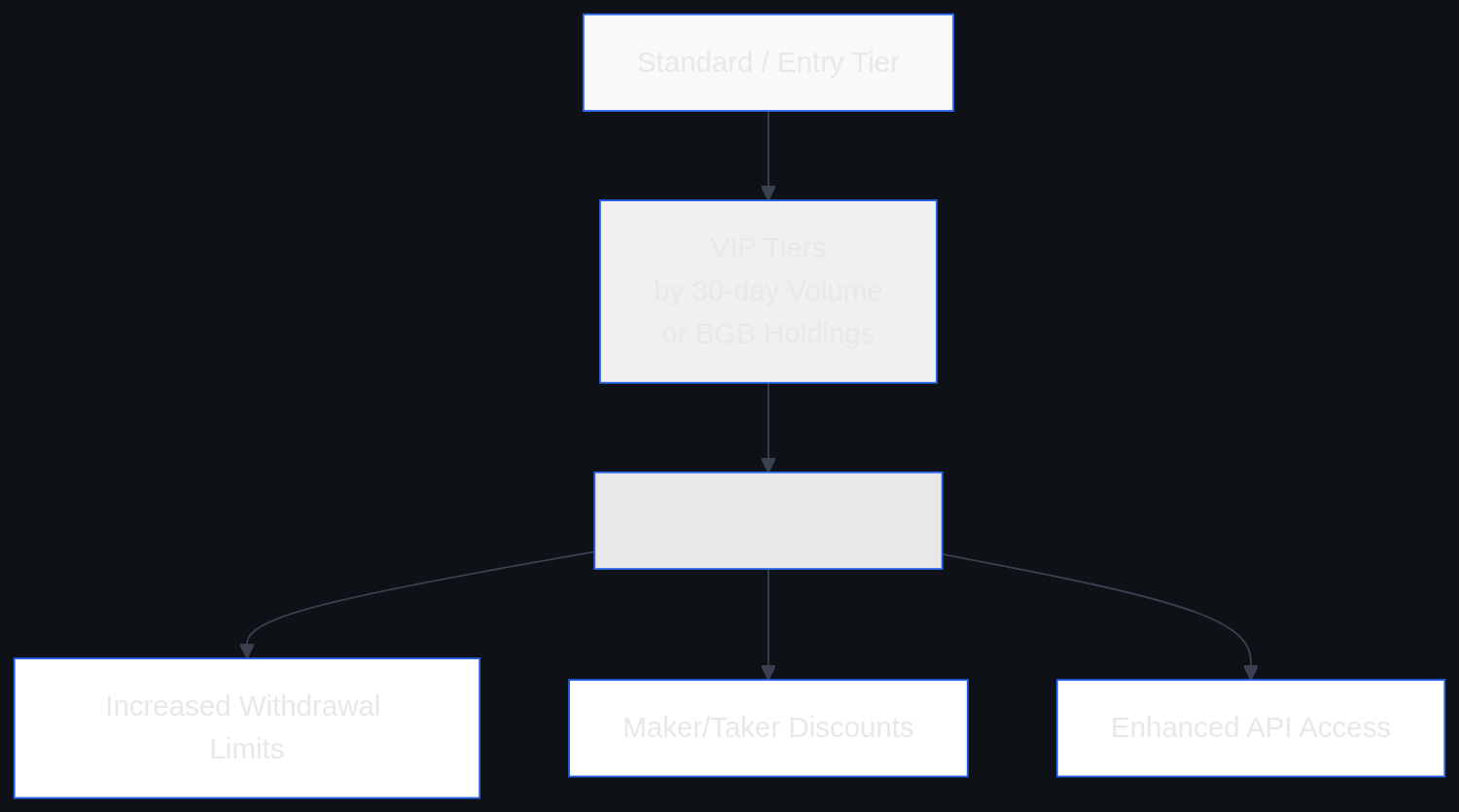
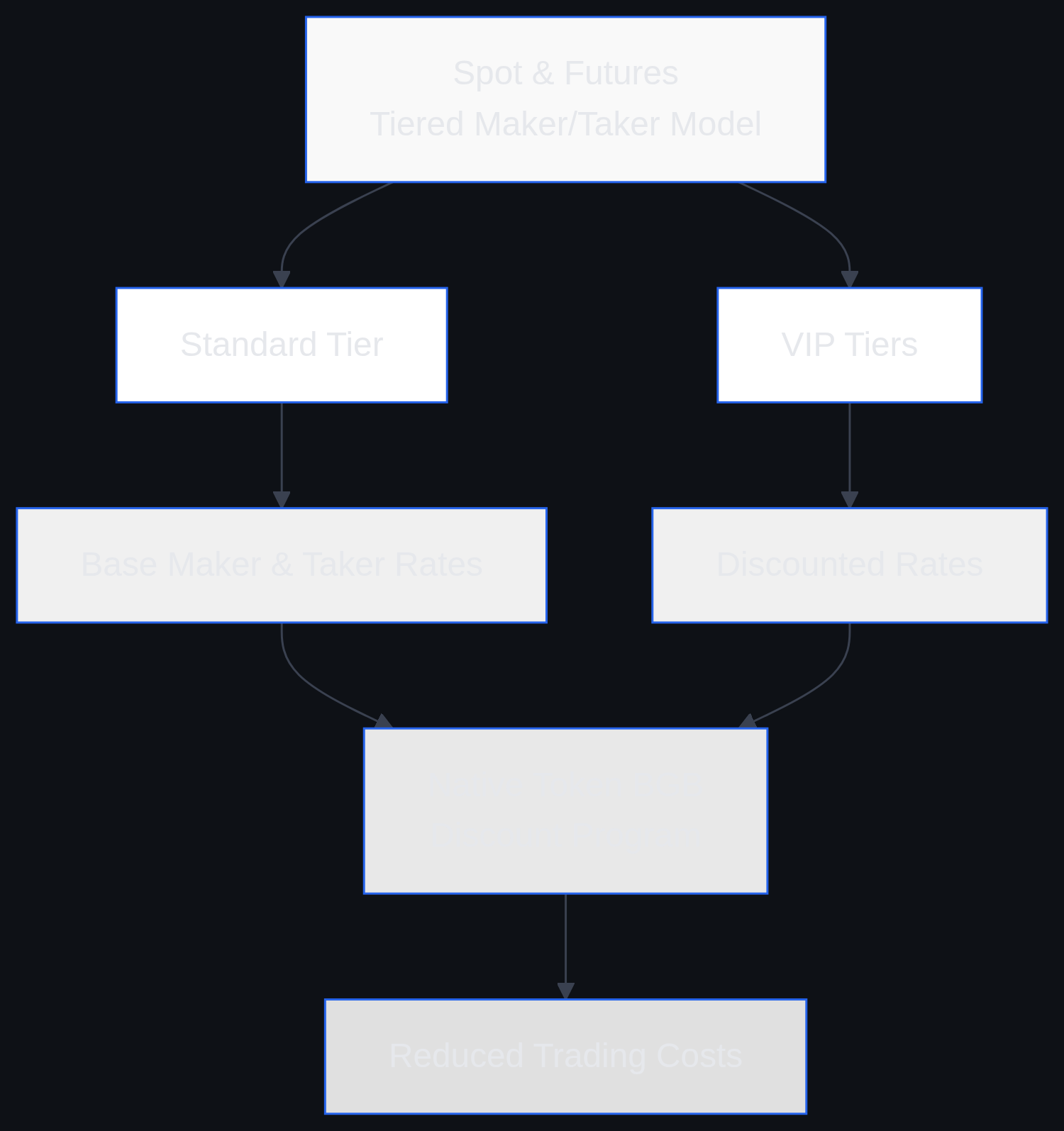
Bitget uses a tiered maker/taker model on both spot and futures markets, with discounts available to users who hold or pay fees in the exchange’s native BGB token. The standard tier sits at the top of the fee curve, with reductions unlocked by 30-day volume, VIP status, or BGB holdings. At the standard tier Bitget charges 0.10% maker and 0.10% taker on spot trades, in line with Binance, Bybit and KuCoin, and 0.02% maker / 0.06% taker on USDT-margined futures (reviewed September 2026). Rates and tier thresholds change, so confirm live rates on Bitget’s official fee schedule before trading.
Futures Trading Fees
| Category | Notes |
|---|---|
| Maker/taker fees | 0.02% maker / 0.06% taker at the standard tier (reviewed September 2026); tiered down by volume, separate from the spot schedule |
| Funding rate | Periodic payment between long and short positions, standard across perpetual futures exchanges; rate floats with market conditions |
| Leverage | Advertised leverage tiers vary by pair; higher leverage magnifies both gains and losses |
BGB Token Fee Discounts
Bitget’s native token, BGB, is reportedly used to unlock reduced trading fees for holders, similar to how Binance’s BNB or OKX’s OKB function on their respective platforms. Specific discount percentages should be checked on Bitget’s current token-utility page rather than assumed, since token-discount programs are adjusted periodically across the industry.
Deposit and Withdrawal Fees
Crypto withdrawal fees on Bitget, as on most exchanges, typically vary by network, for example, a USDT withdrawal sent over the Tron network is generally cheaper than the same withdrawal sent over Ethereum, because the network (not the exchange) sets the base gas cost. Exact current withdrawal fees per asset and network should be checked at the point of withdrawal, since blockchain fee conditions and exchange markups both change. For a broader look at how fee structures compare across the industry, see our crypto exchange fees guide.
Hidden or Indirect Costs
Beyond posted maker/taker rates, traders should account for slippage on thinly traded pairs, funding-rate costs on open perpetual futures positions, and any inactivity or account-maintenance conditions described in Bitget’s terms of service.
Bitget US Availability: Can Americans Legally Use Bitget?
US availability is one of the most frequently searched questions about Bitget, and the answer is no. Bitget’s Terms of Use list the United States, including US territories, as a restricted jurisdiction, identity verification rejects US documents, and Bitget has no US-licensed entity. Unlike OKX, which opened a regulated US exchange in April 2025, Bitget has not announced a US launch. The separate, non-custodial Bitget Wallet app is a different product and is not covered by that restriction.
Why Access Is Often Limited
Offshore exchanges commonly restrict US persons because US money-transmitter licensing, state-by-state regulatory requirements, and federal securities and commodities rules create significant compliance overhead that not every global platform chooses to take on. This pattern is common across the offshore exchange sector, not unique to Bitget.
Risks of Using a VPN to Bypass Geo-Restrictions
Some US users attempt to access geo-restricted exchanges through a VPN. This generally violates the exchange’s terms of service, can result in account freezes, and may leave a user with limited or no recourse if funds become inaccessible, since the account was opened in violation of the platform’s own rules. This is a practical risk consideration independent of any specific legal-status claim about Bitget.
US-Compliant Alternatives
US residents seeking a comparable trading experience under domestic oversight may want to compare platforms built specifically for the US market. Our best crypto exchanges roundup and our Kraken review cover platforms that operate under US-focused compliance programs.
Key Features and Trading Instruments
Spot Trading
Bitget lists a large number of spot trading pairs spanning major assets and a long tail of smaller-cap tokens, appealing to traders who want exposure beyond the largest coins available on more conservative US platforms.
Futures and Margin Trading
Bitget offers both isolated and cross-margin futures contracts with leverage options that the platform advertises as high relative to many US-facing exchanges. High leverage sharply increases liquidation risk during volatile price swings and is generally considered unsuitable for inexperienced traders.
Copy Trading
Bitget’s copy-trading feature allows users to automatically mirror the positions of designated “elite” traders, with a profit-sharing arrangement between followers and the traders they copy. As with any copy-trading product, past performance shown on a leaderboard does not indicate future results, and followers still bear full downside risk on copied trades.
Bitget Earn
Bitget offers savings, staking, and launch-platform products (commonly branded Launchpad/Launchpool across the industry) that let users earn yield or early access to new token listings. Yields on these products are variable and not comparable to insured bank interest.
Bitget Wallet and NFT Marketplace
Alongside the centralized exchange, Bitget operates a self-custody Web3 wallet and an NFT marketplace, extending the platform into on-chain asset management distinct from exchange-custodied balances.

Trading Platforms and User Experience
Web and Desktop Terminal
Bitget’s web terminal offers standard charting tools, multiple order types (limit, market, stop), and a layout common to most derivatives-focused exchanges.
Mobile App
Bitget’s mobile apps are available on the Apple App Store and Google Play. Store ratings and review volume change continuously, so check the current listing directly rather than relying on a fixed figure quoted elsewhere.
API Access
Bitget provides REST and WebSocket API access aimed at algorithmic traders and bot developers, a standard offering among larger derivatives exchanges.
Account Opening, KYC, and Verification
- Sign up using an email address or phone number.
- Complete identity verification by submitting a government-issued ID and any additional documents Bitget’s tiered KYC process requires.
- Enable two-factor authentication and set an anti-phishing code to help confirm that emails originate from Bitget.
- Fund the account through a supported deposit method.
Withdrawal limits typically scale with KYC tier on exchanges structured this way; confirm Bitget’s current tier limits on its verification help page, since these thresholds are adjusted periodically.
Deposits and Withdrawals: Can You Withdraw Money from Bitget?
Yes, verified Bitget users can generally withdraw supported cryptocurrencies to an external wallet, subject to the platform’s standard security checks, network confirmation times, and any KYC-tier withdrawal caps in place at the time. Bitget also supports crypto deposits and, depending on region, certain fiat on-ramp methods such as card purchases or peer-to-peer (P2P) trading.
Supported Fiat On-Ramps
Available fiat methods vary by region and can include bank transfer, card payments, and P2P trading against other users. Availability of any specific method for US-based users should be confirmed directly with Bitget given the access restrictions discussed above.
Crypto Withdrawal Process and Timing
Crypto withdrawals are processed on-chain once approved, with timing dependent on network congestion and Bitget’s internal review procedures. Address whitelisting, when enabled, adds a short delay for new withdrawal addresses as a security measure.
Common Withdrawal Issues
Users on public forums have reported occasional withdrawal delays, especially during high-volatility periods or when additional verification is triggered. As with any exchange, keeping KYC documents current and enabling security features like whitelisting can reduce friction when withdrawing funds.
Customer Support and Education Resources
Support Channels
Bitget offers live chat and ticket-based support, along with a help center. Reported response times vary by region and ticket volume.
Bitget Academy
Bitget publishes educational content, including fraud-prevention guides and trading tutorials, aimed at helping newer users understand exchange mechanics and common scam patterns.
Bitget Pros and Cons
Pros
- Broad spot-market selection covering many smaller-cap tokens
- Copy-trading platform for users who want to follow other traders’ strategies
- BGB token fee-discount program for active traders
- Public proof-of-reserves page offering a degree of transparency into custody practices
- Deep derivatives product suite, including high-leverage futures
Cons
- Not available to US residents: the United States is a restricted jurisdiction under Bitget’s Terms of Use
- Mandatory KYC required to access full account functionality
- Public complaints, including on Reddit, about token delistings affecting holders
- Regulatory footprint in major Western markets is less established than at domestic-first exchanges
- High-leverage products increase liquidation risk for inexperienced traders
Bitget vs Competitors: How It Stacks Up
Bitget competes most directly with other large offshore derivatives-focused exchanges rather than with US-first platforms.
Bitget vs Binance
Both platforms offer large coin selections, high-leverage futures, and native-token fee discounts. Binance generally has a larger overall trading volume and a longer track record of large-scale operations; specific fee and leverage comparisons should be checked on each exchange’s current fee schedule.
Bitget vs Bybit
Bybit and Bitget both emphasize derivatives and copy trading. Feature sets overlap significantly; the better fit often comes down to specific asset availability and each platform’s current fee tiers rather than a clear overall winner.
Bitget vs OKX
OKX also offers a broad derivatives suite alongside a Web3 wallet, similar in structure to Bitget’s offering. Our OKX review covers that platform’s fees and features in more detail for comparison.
| Category | Bitget | Binance | Bybit | OKX |
|---|---|---|---|---|
| US retail access | Not available | Global site not available; separate Binance.US affiliate (spot only) | Not available | Global site not available; separate OKX US exchange (spot only, most states) |
| Coin selection | Broad | Very broad | Broad | Broad |
| Copy trading | Yes | Limited | Yes | Yes |
| Native token discount | BGB | BNB | None on spot | OKB |
Fees and availability reviewed September 21, 2026.
Real User Sentiment: Trustpilot, Reddit, and Capterra Findings
Common Complaints
On Reddit, some users have raised concerns about project delistings and support responsiveness. Complaints of this kind are common across large exchanges and should be weighed as anecdotal signal rather than definitive proof of a systemic problem.
Positive Feedback Themes
Reviews on platforms like Trustpilot and Capterra often cite ease of use and general platform stability as strengths, alongside interest in the copy-trading feature.
Weighing Anecdotal Reviews
Review-site scores can be skewed by incentivized reviews, vocal minorities, or timing around specific incidents. Treat aggregated star ratings as one input among several rather than a substitute for checking an exchange’s own disclosures and regulatory status.
Risks of Using Bitget: What to Know Before You Sign Up
- Regulatory risk: Bitget’s licensing footprint in major Western markets is less established than at domestic-first exchanges; confirm current status with local regulators before depositing significant funds.
- Leverage and liquidation risk: High-leverage futures products can lead to rapid, total loss of the margin posted on a position during volatile price moves.
- Custodial risk: Funds held on any centralized exchange, including Bitget, are subject to counterparty risk, the exchange, not the user, controls the private keys for exchange-custodied balances.
- Delisting and liquidity risk: Tokens can be delisted from any exchange with limited notice, which may affect a holder’s ability to trade or withdraw that specific asset in the short term.
Crypto exchange balances are generally not covered by FDIC or SIPC-style deposit insurance, regardless of which platform is used, and trading leveraged crypto products can result in rapid, total loss of capital. This is not a suitability assessment for any individual reader.
FAQ
Is Bitget safe to use?
Bitget publishes a proof-of-reserves page and references a protection fund and bug bounty program, which are positive transparency signals, but the specific reserve figures are company-reported and its regulatory footprint in major markets is less established than at domestic-first exchanges. Treat “safety” as a spectrum tied to custody practices and jurisdiction rather than a binary label, and verify current disclosures directly on Bitget’s site.
What are Bitget’s trading fees?
Bitget uses a tiered maker/taker structure on spot and futures markets, with discounts available for users who hold or pay fees in BGB, its native token. Standard-tier rates are 0.10% maker / 0.10% taker on spot and 0.02% / 0.06% on futures (reviewed September 2026). Confirm current percentages on Bitget’s official fee schedule, since rates and tier thresholds are adjusted periodically across the industry.
Can you withdraw money from Bitget?
Verified users can generally withdraw supported cryptocurrencies to an external wallet, subject to network confirmation times and any withdrawal limits tied to their KYC tier. Fiat withdrawal options depend on region and supported payment method.
Is Bitget available in the US?
No. The United States, including its territories, is a restricted jurisdiction under Bitget’s Terms of Use, and Bitget has no US-licensed entity. US-based readers should consider comparing options in our best crypto exchanges guide.
What are the risks of using Bitget?
Key risks include limited regulatory oversight in major Western markets, high-leverage products that can produce rapid losses, standard custodial/counterparty risk associated with holding funds on any centralized exchange, and the possibility of token delistings affecting specific holdings.